Discover the 25 year journey of a 3d enthusiast.
About
Ever since I was a child, I was drawing. But I quickly realized that I was not good at it, especially when I compared myself to a few guys in my school that had a natural talent for it.
Still, I was making what I could in terms of illustration, map-making (for roleplaying games and wargames) and photography.
Later, I tried digital image manipulation with Photoshop and a few plugins by a company named Metatools.
The Bryce Age
Things changed in the late 90s as I bought the box of a curious software in a computer store in Paris. It was Bryce 2.
I was hooked. Instead of having to rely on my poor drawing skills to create images, I could rely on technical knowledge of the software to make them.
Bryce was cutting edge at the time and quite easy to use thanks to its innovative interface. It was slow as hell (still is) and I spent countless hours watching the thin grey line go across the screen of my Pentium computer.
Bryce also had a quite lively community that exchanged on newsgroups, created CD compilations of 'art' and sometimes met and shared experience.
It was a wonderful time.
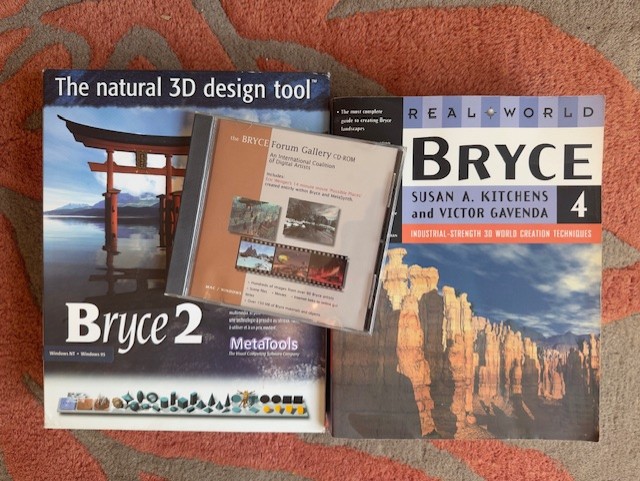
It ended in 2000 when MetaCreations dumped its whole suite of consumer graphic software also including Carrara, Painter and Poser.
Vue Infinity
I tried a few different landscape generators to replace Bryce in the early 2000s and finally opted for Vue Infinite. It had a few features that were strangely similar to Bryce ones (the nano preview and navigation buttons for instance), but added interesting new ones: ecosystems, infinite terrains, different atmosphere models.
I later became part of the e-On Software beta-testing team, from Vue 7 to Vue 11.
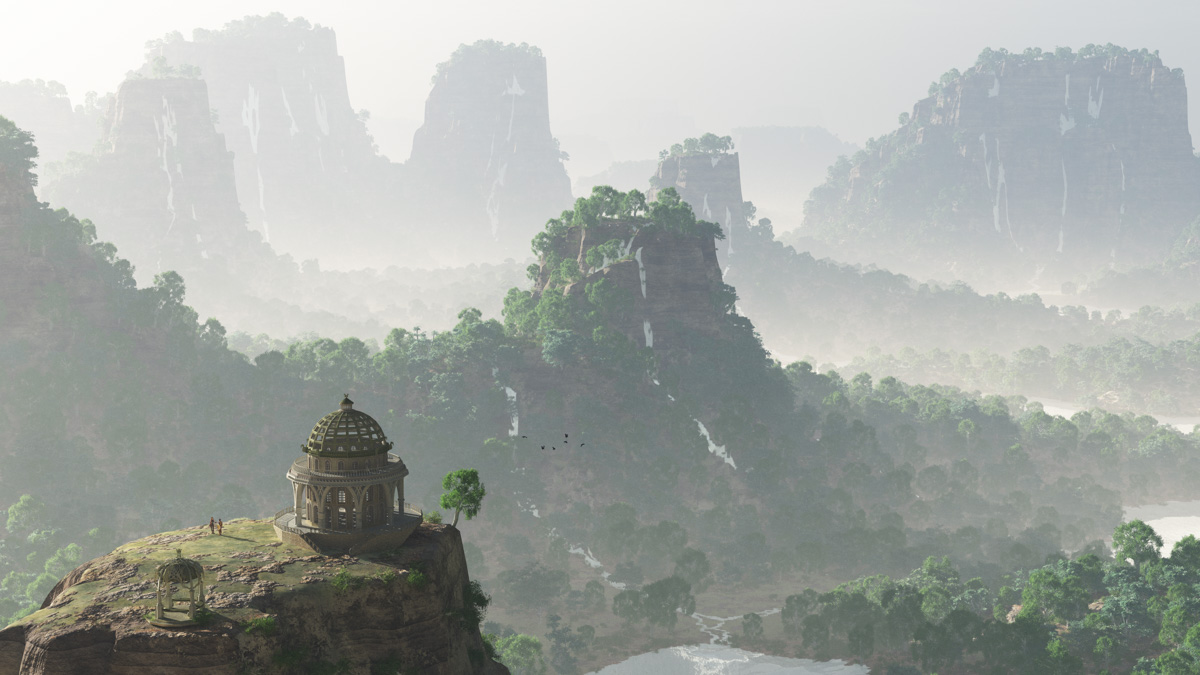
I was also featured on Cornucopia 3D with a tutorial based on the following picture.
In 2015, Bentley Systems acquired e-On Software. They switched to subscriptions, with Vue and The Plant Factory only being sold as a bundle. I kept my 2014 version and looked for a replacement to Vue.
Less than 10 years after these decisions, Bently Systems officially killed Vue and The Plant Factory, stopping their development and releasing them for free.
C4D and Octane Render: powerful duo
Back in 2003, I was considering switching to professional 3D and joining 3 former colleagues that started a new company. They were using Cinema 4D and were very happy with its rock solid german stability.
I finally did not join the company, but years lated, decided to learn Cinema 4D and a new renderer that was available for it: Octane Render (V2 at the time).
Coupled with a good graphics card, Octane's pathtracer was blindingly fast and made it possible to preview scenes like never before. The displacement enabled very detailed ground materials and the scatter system could swallow millions of instances withtout budging.
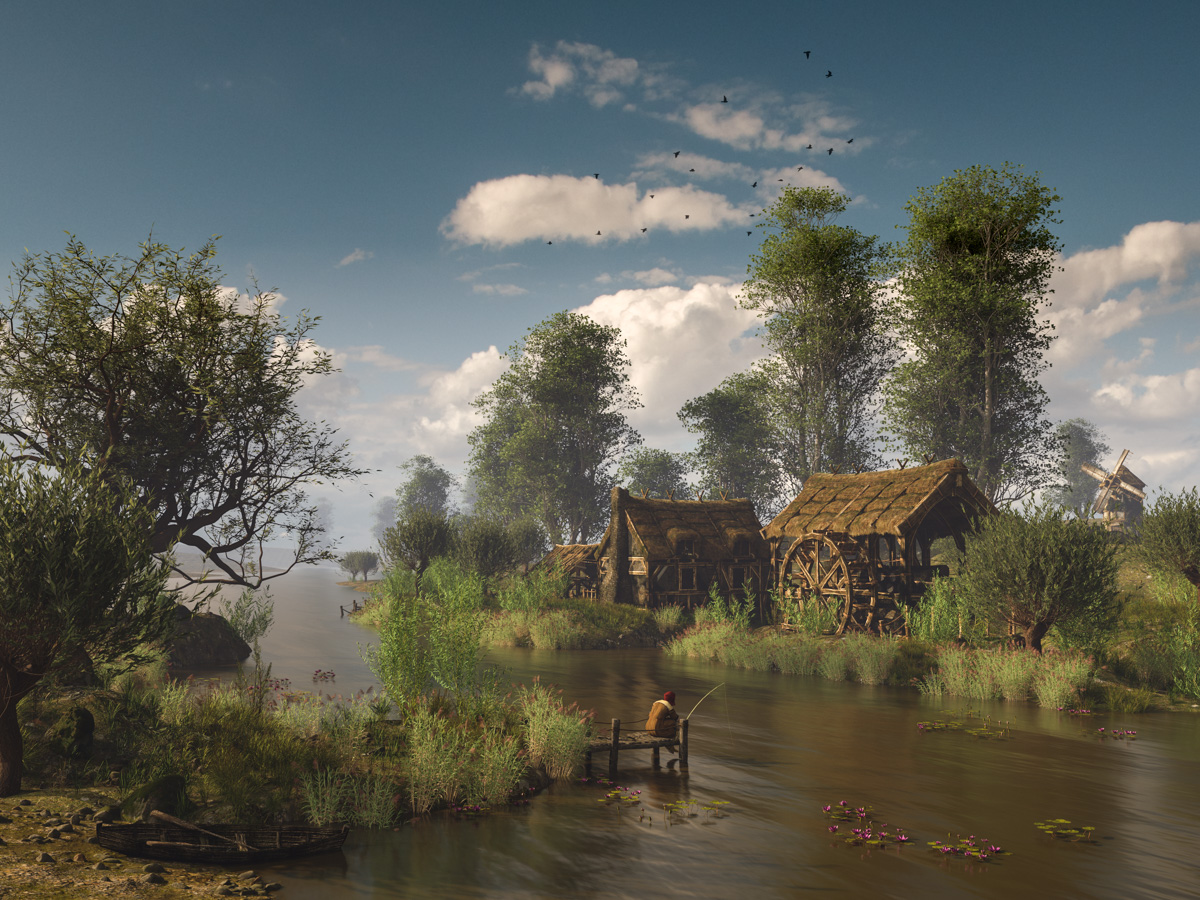
Both C4D and Octane were developed following a yearly pace and constantly adding new features... but these features were not really the ones I wanted for my landscape pictures. They also both switched to subscription plans and were finally very costly. In 2024, I decided to look elsewhere and switch to another 3d app I had long overlooked: Blender.
Blender: the free alternative
Blender is a bit like WordPress: it has a very large user base, a very active community, tons of addons and litteraly thousands of tutorials. In comparison, C4D would be a bit like Typo 3: less used but more coherent and solid.
Even though Cycles was not 100% on par with Octane Render on some aspects (adaptive displacement for instance), Blender had many features and plugins that made my life easier for 3d landscapes and digital illustrations. It is not easy to learn, but there are tons of sources to learn from.
And there are multiple content libraries available, especially for plants and natural elements.
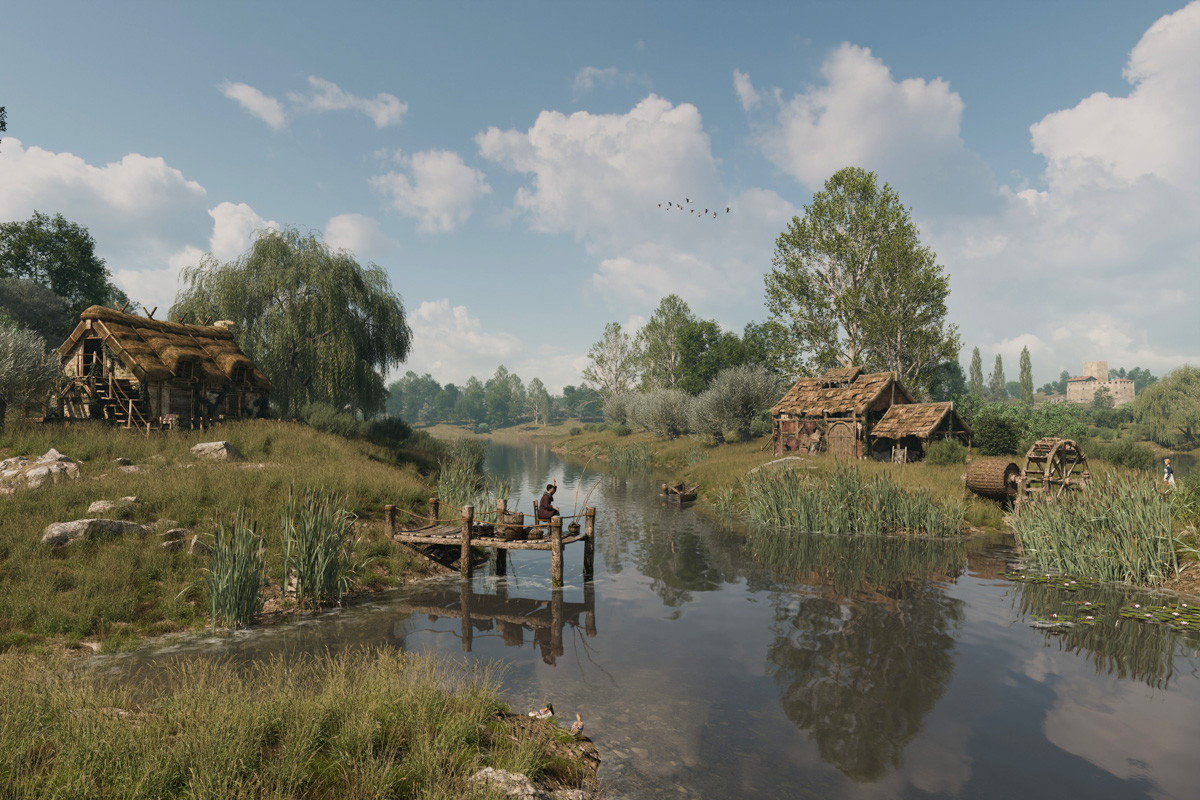
The Blender ecosystem and its development path are quite promising and I look forward to be using it for the years to come.
28 years of 3D
1997
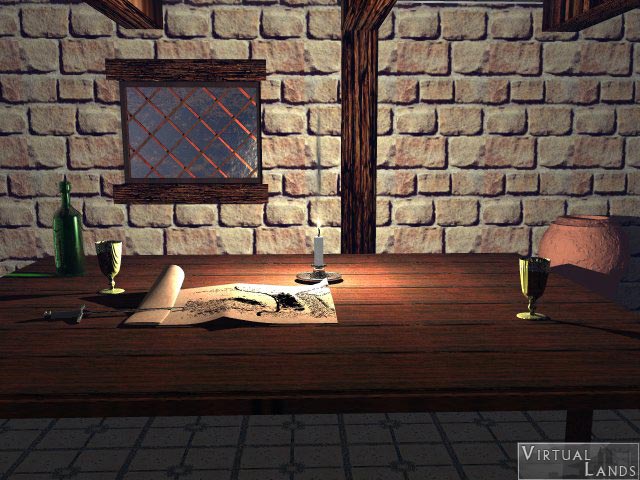
This image, titled The Golden Lamproy was made in 1997. The items were modelled in Amapi and the textures were quite crude.
2025
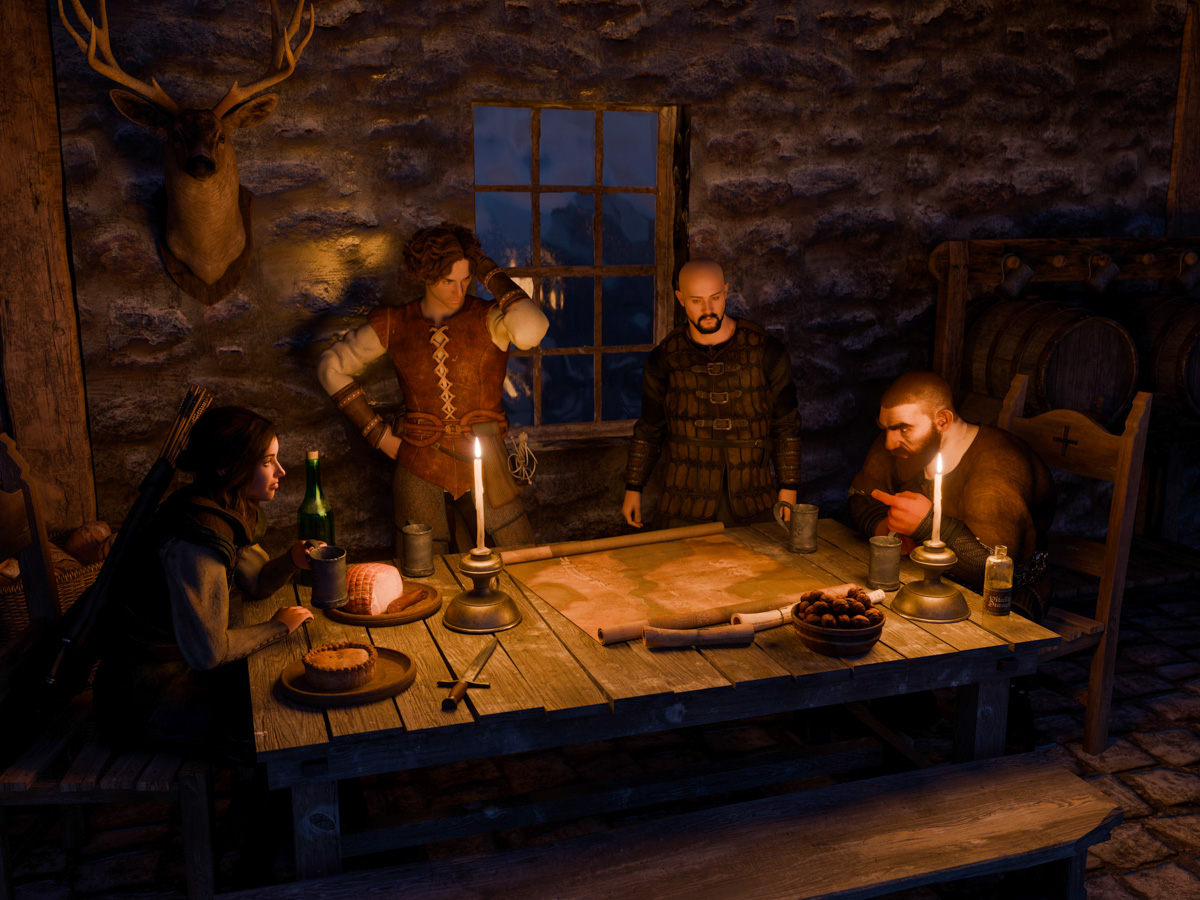
Faster and more realistic rendering, integration with other software (Daz 3d) and content libraries helped me to make this new version of the original image.